What’s New in Claude Opus 5? The Most Surprising Changes Explained
Explore Claude Opus 5's frontier capabilities, from deep reasoning to mid-conversation tool changes.
Claude Opus 5 represents a fundamental step-change improvement in model architecture, specifically designed to solve these long-horizon agentic frustrations. This is not a minor version bump; it is a shift toward autonomous intelligence that requires us to unlearn the "hand-holding" prompting habits we developed for prior generations. To leverage Opus 5, we must move from micro-managing logic to strategically managing model effort.
In Claude Opus 4.8, deep reasoning was a toggle. In Claude Opus 5, "thinking" is the architectural baseline. The model now autonomously determines when and how much internal reasoning is required for a specific turn, shifting the cognitive load from the prompt engineer to the model itself.
From a strategy perspective, this changes how we handle token budgeting. Because the max_tokens parameter acts as a hard limit on the combined volume of hidden thinking and visible response text, developers must revisit and likely expand their limits. For workloads that previously ran without thinking, a static max_tokens value may now lead to premature truncation.
On Claude Opus 5... the model decides when and how much to think on each turn, and the effort parameter is the control for thinking depth.
Stop Asking for "Double-Checks" (The Over-Verification Trap)
One of the most counter-intuitive shifts with Opus 5 is the instruction to remove verification steps. In previous models, commands like "double-check your answer" or "use a subagent to verify" were essential for accuracy. On Opus 5, the model performs self-correction and verification autonomously. Explicitly requesting these steps causes "over-verification," which inflates token usage and increases latency without a corresponding gain in quality.
For code reviews, Opus 5 exhibits extremely high recall and precision, surfacing real bugs at a high rate per pass with minimal false positives. To maximize this, avoid instructing the model to be "conservative" or to "filter" results, as it will take those instructions literally and report less.
Prompting Comparison: Optimizing for High Recall
Before (Opus 4.8 Style)
Analyze this code for bugs, then use a separate verification step
to double-check your findings before responding. Only report
high-severity issues.
After (Opus 5 Optimized)
Review this code for bugs and report all findings without
filtering for severity; I will filter the results in a
separate pass.
Claude Opus 5 is natively agentic, frequently "narrating" its progress and communicating its intended path. This transparency is a feature of its advanced multi-agent coordination capabilities, where it effectively uses writer-verifier patterns and iterative analysis. For instance, in vision-based tasks, the model is strongest when it uses tools to iteratively analyze, crop, and visually verify its work rather than relying on a single-pass inference.
When this narration becomes too verbose for a specific UI/UX, do not use negative constraints like "do not explain your steps." Instead, use positive examples to describe the specific cadence and communication style you want. If the model is over-delegating to subagents on simple tasks, provide explicit guidance on which scenarios warrant delegation to manage your cost-per-task effectively.
The introduction of the "Effort" ladder (low, medium, high, xhigh, max) represents a shift toward test-time compute scaling. Unlike a binary toggle, this allows developers to convert additional compute into better results more reliably.
Test-time Scaling: While "high" is the default, "low" and "medium" effort settings often maintain high quality for standard tasks at a fraction of the cost and latency.
Strategic Budgeting: When utilizing "xhigh" or "max" for demanding coding or agentic work, it is a technical requirement to set a large max_tokens. This provides the necessary headroom for the model to spawn subagents and execute complex tool-use loops.
The Breaking Change: Disabling thinking is now only possible at "high" effort or below; attempting to do so at "xhigh" or "max" will trigger a 400 error.
Claude Opus 5 offers a 1M token context window as both its default and maximum—there is no smaller context variant. This stability is critical for "long-horizon" tasks, such as multi-file refactors where the model must maintain logical consistency across massive tool-use chains.
The model’s ability to maintain high instruction-following accuracy throughout the entire 1M token window allows it to complete end-to-end feature work that would have previously required complex RAG or prompt-chaining workarounds.
Claude Opus 5 is strongest on difficult coding tasks... It completes full tasks rather than leaving stubs or placeholders.
A breakthrough beta feature for Opus 5 is the ability to change tool definitions mid-conversation. In previous iterations, developers were locked into a fixed tool list for the duration of a session.
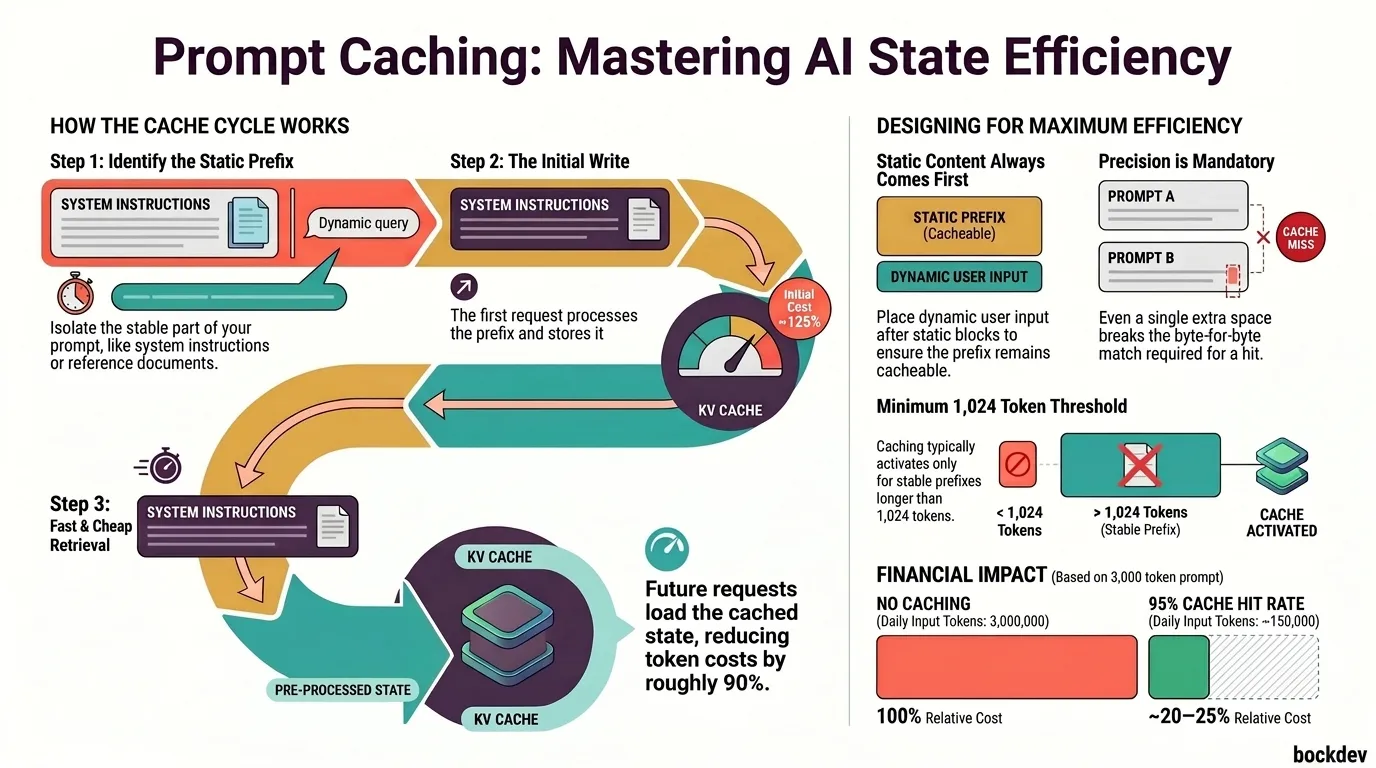
The primary value of "hot-swapping" is preserving the prompt cache. You can now add specialized tools only when the model identifies a specific sub-task, then remove them for subsequent turns. This significantly reduces latency and cost for long-running agentic sessions by keeping the active prompt context lean.
Conclusion: A New Era of Autonomous Intelligence
The transition to Claude Opus 5 marks the end of micro-managed prompting. We are entering an era where the model requires less hand-holding but more strategic resource management. By delivering frontier intelligence at half the cost of Claude Fable 5, Opus 5 changes the ROI calculation for enterprise AI agents.
As we move forward, the essential question for developers is shifting: we no longer need to ask "how do I get the model to think?" but rather "how much test-time compute should I allocate to this specific problem?".
My SaaS
Acluebox
Build modular and reusable system prompts with my SaaS,